
Auburn Previous Residents by Era
An address history works best when the source matches the date. Auburn has no single roll of everyone who ever lived at one house. Current parcel reports establish the legal parcel and taxpayer relationship. Recorded instruments document transfers and other claims. Printed directories and the census add dated household evidence, while maps and permits describe the site itself. The county line matters throughout: King County and Pierce County maintain separate assessor, GIS, and recording systems.
| Address-history source | Documented period | Custodian or access point | Evidence available |
|---|---|---|---|
| King recorded documents | Basic index, 1976 to July 1991; most images from August 1, 1991 | Landmark Web and King County Archives | Grantor, grantee, date, recording number, and legal clues |
| King archival recordings | 1852 through July 31, 1991 archival focus | King County Archives, including microfilm and originals | Deeds, plats, leases, liens, easements, and related filings |
| Pierce recorded documents | Online guidance begins in 1984 | Pierce County Auditor Aumentum and copy requests | Instrument index, images when available, and first-page details |
| Auburn and regional directories | 1968–1970, 1972–1975, 1976–1983, 1985, 1987, 1991, and 2000 | Washington State Library | Dated name, address, and occupation leads |
| King County census | 1871 | Washington Digital Archives | Household, age, birthplace, occupation, and literacy fields |
| Auburn/Slaughter Sanborn map | April 1910 | Library of Congress | Five sheets of blocks, structures, streets, and uses |
Begin with the closest reliable date. For a recent transfer, use the current parcel card and county recorder. For a household from the late twentieth century, consult the applicable State Library directory edition. For older Auburn previous residents, combine the historical census, land collections, local newspapers, cemetery records, and the Sanborn map. A gap is meaningful. It should send the search to an archive or request channel, not invite a guessed date or person.
Date the Auburn Address First
Before searching a name, record the address exactly as it appeared at the date being studied. Auburn incorporated as Slaughter in 1891 and received its present name in 1893. A search before that change should include both place names. Main Street and Auburn Avenue references also need to be preserved as printed. Search terms should add Washington and the proper county so unrelated Auburn, New York material does not slip into the trail.
Municipal borders changed too. Lakeland Hills South annexations ran from 1998 through 2005, while much of West Hill and Lea Hill joined Auburn in 2008. A house now inside Auburn may appear under a rural or neighboring jurisdiction in an older directory. Start with the Auburn City Limit Tool, then check city GIS and the matching county parcel viewer. Save the source date, county, ZIP, parcel number, and any former label before tracing past residents.
Reverse the Auburn Deed Chain
Ownership is the firmest backward path, though it does not prove residence. Find the current Auburn parcel by address in the proper county system. King County eReal and Parcel Viewer support address, parcel-number, and condo-name routes; the public owner-name route was not verified. Pierce County PublicGIS accepts an address, intersection, parcel, or place. Copy the parcel number, legal description, situs address, taxpayer or mailing relationship, sales history, and building facts. A situs address is the physical property location, while a mailing address is where the tax notice goes.
- Retrieve the present parcel report and copy its current taxpayer, parcel number, legal description, and latest sale reference.
- In King County Landmark Web or the Pierce Auditor system, find the newest transfer by recording number, parcel, date, or party.
- Read the instrument. Identify the grantor who conveyed the interest and the grantee who received it.
- Search the seller as an earlier grantee, using the legal description and nearby dates to confirm the match. Repeat for each transfer.
- When the web index ends, request a copy or move to Archives, microfilm, deed books, or the county counter. Do not treat an online cutoff as the first owner.
- Grantor and grantee
- The grantor gives or conveys an interest; the grantee receives it.
- Chain of title
- The linked series of recorded transfers for the same property interest.
- Legal description
- The recorded wording that identifies land by lot, block, plat, or survey rather than a changeable street label.
- Criss-cross directory
- A directory arranged by address or street, useful for finding a dated occupant when that feature exists in the edition.
Trusts, estates, quitclaims, mortgages, easements, plats, parcel splits, and name changes can break a neat owner-to-owner sequence. Compare recording numbers and legal descriptions, then read each actual instrument. Landmark images are unofficial. Certified or restricted copies follow the recorder's separate copy process. On the King side, the copy form accepts document type or number, dates, parties, plat, volume and page, and parcel details. Pierce also provides an Auditor route for recorded-document copies.
Two Auburn Recorder Paths
Auburn address histories can fall into either county record chain. King County's basic recording index reaches to 1976, and most online images begin August 1, 1991. King County Archives covers older recorded documents back to the county's 1852 creation through indexes, microfilm, and original material. Researchers should contact Archives before a visit and use the Recorder copy request when a known document is available.
On the Pierce side, official guidance dates online recorded documents to 1984. Search the Pierce County Auditor's Aumentum system, then use the Auditor or public-disclosure route for a restricted or unavailable copy. FamilySearch's Washington land collection includes King records from 1852 through 1924, but its Pierce holdings are not a blanket substitute for the county index. County choice must be checked against the parcel, not assumed from an Auburn mailing label.
Auburn Previous Residents on Maps
The Library of Congress Auburn/Slaughter Sanborn set is a five-sheet view of Auburn in April 1910. It can anchor an old directory address to a block, cross street, structure footprint, or property use. It cannot name each person who lived there. Only this Auburn Sanborn year was located in the official search, so later building changes need permits, assessor facts, deeds, or other dated maps.
After fixing the historic block, continue through the official King County Landmark recorded-document search.
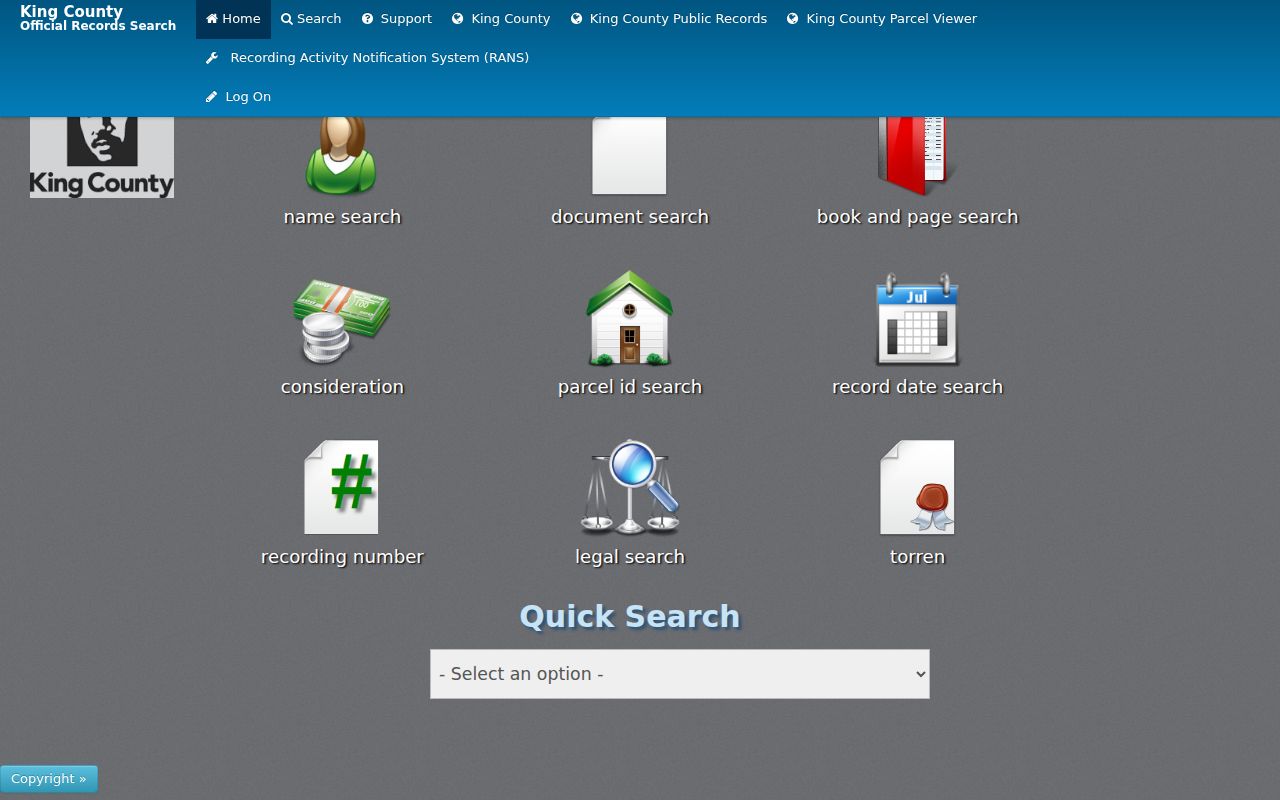
The recorded-document screen above is the next bridge after present-day GIS. Pair its parcel and legal fields with the stable block clues on the map. When a house number fails, compare cross streets, lot order, parcel shape, and former owner names. No official citywide Auburn renumbering date was found, so each change must be supported source by source.
Auburn Past Residents Beyond Owners
A deed names parties to a transfer, not all past residents. Dated directories may place a person at an address and add an occupation, but the actual edition controls what fields appear. The official State Library guidance lists Auburn editions for 1968–1970, 1972–1975, and 2000, plus Seattle Suburban South editions covering Auburn for 1976–1983, 1985, 1987, and 1991. Those volumes are on-site-oriented, and no viewable Auburn sample entry was found online. Contact the library before travel and verify any spouse, householder, or abbreviation marks in the volume itself.
Build the household sequence in dated steps:
- Place the street and house number in the closest available directory edition, recording the entry exactly as printed.
- Compare the prior and next available editions. Note changes in surname, occupation, address form, and any blank years.
- Use the 1871 King County census only for the right county and period. Search by last, first, middle, Soundex, birthplace, and year fields.
- Test names in land, probate, obituary, newspaper, cemetery, and yearbook sources. Treat each as dated support, not automatic proof of residence.
- Return to the deed and parcel chain to explain a move, estate transfer, parcel split, or changed street label.
The detailed shelf and edition notes belong on the Auburn city directory page. KCLS offers scheduled genealogy help and a limited obituary search when a date of death and a short date window are known. White River Valley Museum adds local newspapers, yearbooks, catalog records, and appointment research. Its archive appointments require at least two weeks' notice; research service is $25 per hour. Past household members who left few official records may still appear in those community sources.
Lawful use. Trace Auburn previous residents for house history, genealogy, or estate research, never to track, harass, or expose a living person.
Auburn Archives Fill the Gaps
Older address research depends on handoffs. Washington Digital Archives holds the searchable 1871 King County census with 1,988 indexed records and images. FamilySearch adds land, naturalization, probate, and county materials, though an account or research center may be needed for some images. The Auburn FamilySearch Center at 625 M Street NE is appointment-only and offers computers, microfilm, scanners, and printers.
White River Valley Museum is the strongest Auburn-specific stop for archives, objects, yearbooks, newspaper research, and local context. Its archival material is available free by appointment on weekdays from 9:30 a.m. to 4:30 p.m., with advance notice. Mountain View Cemetery supplies another historical lead. It began in 1890, before the Auburn name, but no official public interment database was located. A burial question therefore needs direct cemetery contact rather than an invented online search.
What Auburn Address Records Prove
Keep a source ledger for every claimed past resident. A parcel report shows a taxpayer or owner relationship. A deed shows a legal transfer. A directory supplies a dated name-and-address lead. A census describes a household at one enumeration. A permit links people or firms to municipal work, not necessarily to daily occupancy. An obituary or probate file can explain death, family, or estate events, yet still may not establish that each named person lived at the house.
Record the source title, date, county, address form, parcel or recording number, and confidence level. Mark conflicts instead of merging them. For missing public records, the Washington Public Records Act provides request access, and an agency generally owes an initial response within five business days. Archives, copy requests, phone contact, mail, and in-person research remain valid access channels when a portal lacks the image or year. That full trail is more reliable than a commercial result that hides its source date.